Introduction
I participated in my first hackathon last year and have since attended two more, for a total of three.
I never wrote a proper retrospective, so I’m summarizing how I got involved and what I gained.
I’ll cover one hackathon per post. This is part 1 of 3.
TL;DR
- Summary of my experience at the UMP-JUST hackathon
- We won the Technical Award and the cotomi Award
- I got even closer with my teammates
What is a hackathon?
A hackathon is an event where people (often CS students) get together and build software in a short time.
Typical flow:
1. Theme announcement
- The organizers announce the theme. Participants build a service that fits it.
2. Team formation
- Teams of about 3–5 people form and build during the given period.
- Roles are usually split (e.g., engineers who build, someone who presents).
- In software hackathons, roles are often split further: frontend (web), backend (APIs, DB), infra (deployment), etc.
3. Development
- Many events run 1–2 days from idea to demo and final presentation.
- Some give around a month.
- In a 2-day hackathon, the first night often turns into a near all-nighter (I hit my limit around 4 a.m.).
4. Presentation and judging
- Teams present what they built.
- Usually a pitch format, 2–10 minutes.
- Common flow: background → problem → solution → product → demo.
- A great product can fall flat if the presentation doesn’t land, so slides and delivery matter.
UMP-JUST hackathon
This was my first hackathon. It was held over two days, September 7–8, 2024.
It was organized by UMP-JUST (part of the Grad School of Information Science and Technology, UT). I heard about it from a professor in my department.
The theme was “generative AI” (especially LLMs).
Since 2023, LLMs have spread so quickly that many hackathons are now generative-AI themed.
Why I joined
I had never joined a hackathon in college or in my first two years at university; it felt like another world.
In March that year, a friend from the same transfer cohort won a hackathon and went on an overseas trip. That got me interested.
At the time I had almost no software development experience and no side projects. The only thing I could do was a bit of Python and LLM-based algorithm work. (I did get a little exposure to software dev before the hackathon through a friend’s work — more on that another time.)
Still, the conditions for this hackathon were hard to pass up. Participation was limited to students in the department (I think 3rd/4th year undergrads in our program or grad students in information science; there were about 10 teams the previous year). The first prize was 300,000 JPY — very high for an event of that size. Many open hackathons offer around 100,000 JPY or no cash prize and have 30+ teams. So this one was special.
I decided to join. (Yes, the prize was a big motivator.)
Finding teammates
Once I decided to join, I needed a team.
I knew who I wanted to ask from the start: two people from the same transfer cohort who were also at the same internship. I’d known them for over a year and trusted their skills completely. I couldn’t imagine a team without them.
The plan was to team up with strong people and compensate for my own lack of experience.
Both said yes. Team formation was done.
Preparation
With only two days on site, it helps to do some ideation in advance (if you start from zero on the day, you only have about 10 hours of real dev time even with an all-nighter).
We had a couple of meetings beforehand to brainstorm. One of my teammates had won that hackathon I mentioned, so he shared how to come up with ideas and how to approach the day.
Those meetings also made us closer. Ideation was fun.
We narrowed down to two service ideas and went in ready.
The event
Day 1
The venue was on the Yayoi campus. It’s next to the main Hongo campus I usually use, but I’d never been there before.
I got up early, went to campus, and headed to the venue in a fresh mood.
There were 10 teams: two from 3rd year, one (?) from 4th year, one or two ad-hoc teams, and the rest were master’s and PhD teams.
I was pretty nervous at first — it was my first hackathon. Having strong teammates helped; the nerves eased after a while. I used to be nervous through entire piano recitals as a kid, so having teammates I could rely on made a big difference.
The first half of Day 1 was an idea session; in the second half we started building. The idea session was lively; once coding started, every team was heads-down.
We decided what to build during the lunch break and spent the afternoon developing. I took backend and LLM/algorithm work; Friend A took frontend and infra; Friend B led and handled business model research and the presentation. The split was clear, and we’d already discussed an MVP, so we moved quickly.
Day 1 went smoothly.
Then came the all-nighter.
After going home we hopped on Zoom to align on what to build and what to do the next day, then went full speed. I gave in to sleep around 4 a.m., but Friend A stayed up (thank you!). Late-night coding is fun — we stayed on Zoom and chatted while working, and got even closer.
Day 2
The hardest part was getting up in the morning. We made it to the venue.
We spent the morning on the remaining development. We hit the deployment phase on schedule, but time ran out with a few bugs still in place. Huge thanks to Friend A for pushing to the last minute.
We had a few regrets, but I was confident in what we’d built and went into the presentation with that confidence.
Friend B prepared the slides — from the business model to the product and demo. They were great, and I was really grateful. The presentation itself was solid too. Thank you both.
Product demo video
Demo of the service we built:
Results
After all teams presented, we waited for the results on edge. I had a good feeling about both our product and our pitch, but you never know with judges, so I was still nervous.
We won the Technical Award and the cotomi Award. I was really happy.
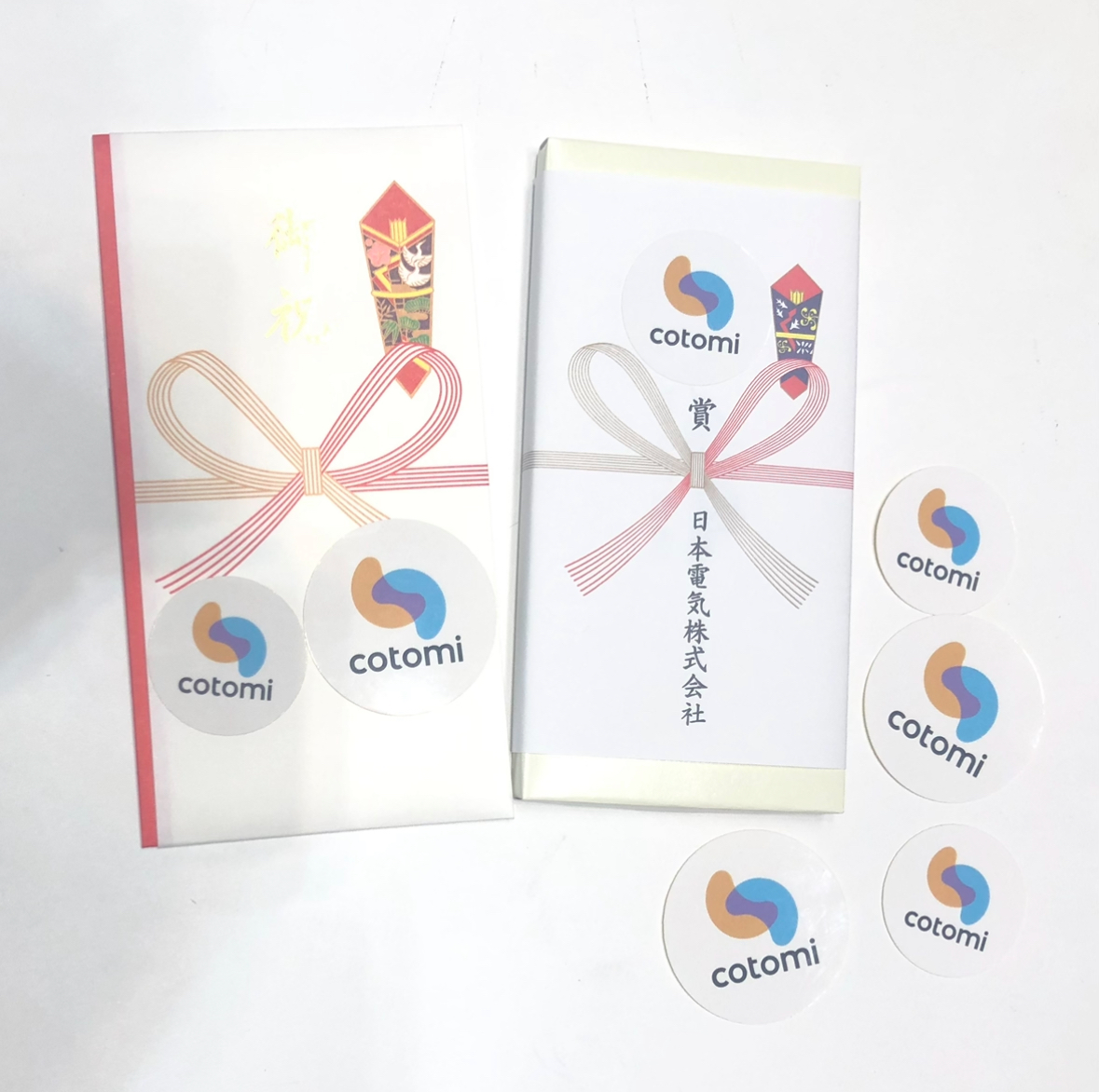
Award ceremony
After the event we had a get-together at a Korean BBQ place near Hongo-sanchome. It was really good.
Get-together
We had a good chat and grew closer as a team.
Takeaways
Hackathons are tough because the time is short, but that same pressure made me learn a lot in a short time.
I’m very grateful to my teammates.
I had a lot of fun.